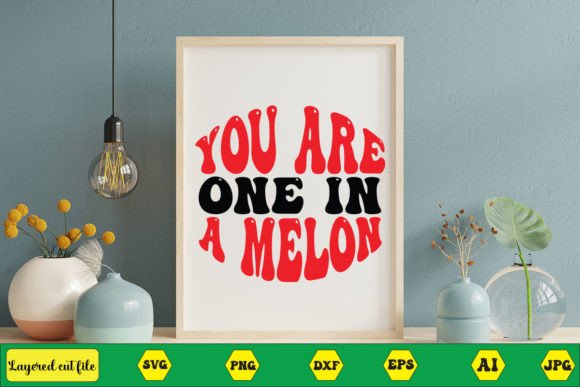
You Are One in a Melon Retro SVG
When I first opened the You Are One in a Melon Retro SVG file, my immediate reaction wasn't about the technical specs or the file format. It was about the vibe. There is a specific energy that retro typography brings to a project, and this design captures it perfectly. As someone who has spent years evaluating machine embroidery design files for everything from boutique branding to custom baby gifts, I know that the difference between a good product and a great one often comes down to how well the digital asset translates into physical thread.
This isn't just another generic text graphic. The playful "melon" pun combined with the retro aesthetic suggests a design that wants to be seen on something soft, textured, and personal. It feels right at home on a summer tote bag, a cozy sweatshirt, or perhaps as a cheeky addition to a nursery wall hanging. But before you hit the "stitch" button, let's talk about what this actually looks like when it moves from your screen to your hoop.
The First Stitch: Visual Personality and Mood
The visual personality of You Are One in a Melon Retro SVG is warm, inviting, and slightly nostalgic. In the world of embroidery projects, mood matters because it dictates how a customer perceives the finished item. A design that feels too stiff can make a handmade gift feel mass-produced, while a design with character invites connection. This file delivers that character immediately.
The layout is balanced, which is crucial for commercial embroidery. If you are planning to use this on a small shop product like an apron or a kitchen towel, the spacing allows the eye to rest without feeling cluttered. However, the retro style relies heavily on clean lines and distinct shapes. When converting this into a digital embroidery file, the sharp angles of the letters need to be handled with care. If the stitch density is too high, those corners can pucker, ruining the vintage look. If it is too low, the text might look thin and fragile on a heavy fabric like denim or canvas.
Real-World Application: From Screen to Stitch
Let me walk you through a scenario I've faced many times in my own workflow. Imagine you are preparing for a craft fair or launching a new line on Etsy. You have a batch of organic cotton tote bags ready, and you want to add a unique touch that screams "summer fun." You decide to use You Are One in a Melon Retro SVG as the centerpiece of your design.
In this context, the design shines. Tote bags are forgiving fabrics; they don't stretch much, and they provide a large enough surface area for the text to breathe. The retro font works beautifully here because it contrasts nicely with the natural texture of the cotton. However, if you were to try this same design on a stretchy knit fabric like a fitted t-shirt or a baby onesie, you would need to be strategic. Stretchy fabrics require a stabilizer that can hold the tension without distorting the lettering. Without the right support, that playful curve of the word "Melon" could end up looking wavy and unprofessional after the first wash.
I also considered using this design for a set of matching holiday gifts. Picture a family receiving embroidered patches or pillow covers with this phrase. The humor lands well, making it a perfect personalized gift. But remember, embroidery adds dimension. Unlike a print, where the color is flat, the thread catches the light. This means your choice of thread colors becomes even more critical. A bright yellow thread on a white background might look vibrant in your mockup but could lose some contrast under dim lighting. Always test your color combinations on the actual fabric you intend to use.
Where to Exercise Caution
While this design is versatile, there are specific situations where You Are One in a Melon Retro SVG might struggle if not prepped correctly. Small hoop sizes are the first red flag. If you are trying to fit this design onto a cap brim or a very small baby bib, the details might get lost. Tiny lettering in embroidery often requires running stitches rather than satin stitches to maintain clarity, but if the original vector paths are too complex, the machine might skip stitches or create unsightly gaps.
Textured fabrics present another challenge. Think about thick fleece, corduroy, or bouclé. While these materials are trendy for custom apparel, they can hide the fine details of a design. On a rough surface, the smooth curves of a retro font might look jagged. Similarly, dark fabrics require a high-density underlay to ensure the top threads cover the background completely. If you don't adjust the stitch density for dark backgrounds, the design might appear faded or patchy.
Curved surfaces like caps are tricky for any text-heavy design. Unless the digitizing software specifically accounts for the curvature of the hat, straight lines can warp. If you plan to sell embroidered patches featuring this text, ensure the border is wide enough to prevent fraying during wear and washing. Frequent washing is a major factor for durability; designs with dense fill stitches tend to hold up better over time than those relying solely on thin outlines.
Professional Notes for the Designer
Before you start selling finished products or adding this to your inventory of design assets, there are a few practical steps every professional takes. First, always test the design on scrap fabric. It sounds obvious, but seeing how the applique design elements (if any) behave on a specific material can save you from a ruined batch of goods. Check the thread color contrast against both light and dark backgrounds to ensure readability.
If you are using this for a craft business or as an Etsy seller, you need to confirm the licensing terms. Does the purchase allow you to sell the finished embroidered items? Can you resell the digital file itself? These distinctions are vital for protecting your intellectual property and avoiding legal issues. Since the product description mentions it is a DIGITAL DOWNLOAD ONLY containing ZIP files compatible with cutting software, verify if the file includes separate layers for embroidery conversion or if you will need to trace it manually in your digitizing software.
Inspect the small details closely. Sometimes, vectors that look perfect on a monitor have tiny nodes or overlapping paths that cause the machine to jump. Review the hoop size requirements to ensure your equipment can handle the dimensions. Use proper stabilizer—cut-away for woven items that need structure, and tear-away for lightweight knits. And finally, compare your work in black and white mockups. Sometimes color distractions hide alignment issues that become glaringly obvious once the thread is in place.
Final Thoughts on Value and Appeal
Ultimately, You Are One in a Melon Retro SVG offers a strong foundation for creating memorable handmade products. It strikes a balance between fun and professional, making it suitable for a wide range of clients, from parents looking for nursery decor to boutique owners needing unique branding. When executed with care, it elevates the perceived value of your finished product.
Customers trust designers who pay attention to the nuances of stitching. They notice when a logo sits flat and true, and they appreciate the tactile quality of a well-executed embroidery file. By taking the time to understand the limitations and strengths of this design, you can turn a simple digital download into a standout piece of art that people will want to keep forever. Whether it ends up on a sweatshirt, a tote bag, or a holiday ornament, the key is preparation. Test, adjust, and then stitch with confidence.